

When I personally emailed every single longtime subscriber of my Wright Society newsletter to let them know about this new age/proof design project, I received one reply that stopped me in my tracks.
“I’m 101, living at home and plan to stay… so I’m not sure your newsletter is for me.”
That was from Roland Reisley, one of the original clients of Frank Lloyd Wright and the legendary American architect’s last living client.
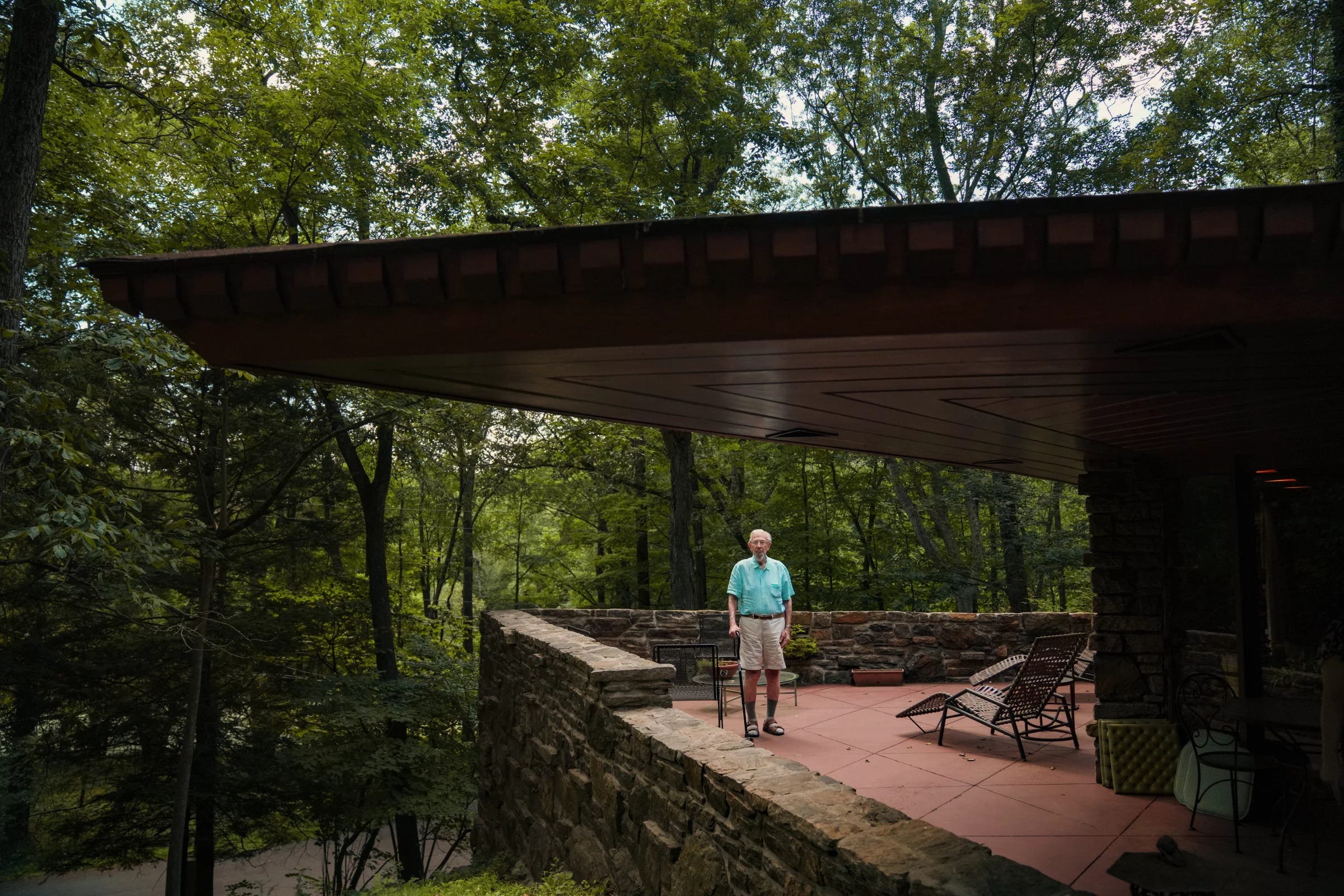
Roland is a retired physicist who later worked in the electronic instrument business.⁵ He’s lived for decades in a home Wright designed for him and his young family in the Usonia community of Pleasantville, New York.
Roland may not think this newsletter is for him.
And he might be right.
But I can’t think of a better person for us all to learn from!
This is his story — as told to me during a conversation we previously had, as well as journalists from National Public Radio and the Wall Street Journal.
A Life Designed, Not Just Lived
Roland wasn’t a design-world elitist. He was 26 years old, newly married in 1950, trying to put down roots with his wife, Ronny.⁵ They heard about a cooperative in Westchester County where affordable homes would be supervised by Frank Lloyd Wright. They weren’t looking for status.
“We were not, in fact, looking for something special. We were just looking.”¹
They joined Usonia and chose a site. They assumed one of Wright’s apprentices would design their house. Then David Henken (the community founder and Wright’s liaison) told Roland that Wright had seen their site and wanted Roland to call him.¹
A few weeks later, Wright was out walking the land with them.
“You’re My Client. I’m Your Architect.”
Wright’s original design for the Reisleys centered on an approximately 1,800-square-foot, low-slung house embedded into the hill, with a carport and two stone masonry pillars.⁵ That “embedded into the hill” part wasn’t decorative. Roland assumed the house would sit higher up for the view. Wright had other ideas.
“That’s just a house on a hill… it must be of the hill.”¹
When Wright sent preliminary drawings, Roland’s wife spotted practical gaps. No broom closet. Not enough shelves for their books. Roland took his notes to Wright in person.
He expected a brush-off. Instead, he got permission.
“You’re my client, I’m your architect. I’ll redesign your house as many times as I have to until I’ve satisfied all your needs… But you have to speak up.”¹
The “needs” part mattered. Roland later described learning to talk to Wright about function rather than stylistic preference.⁵
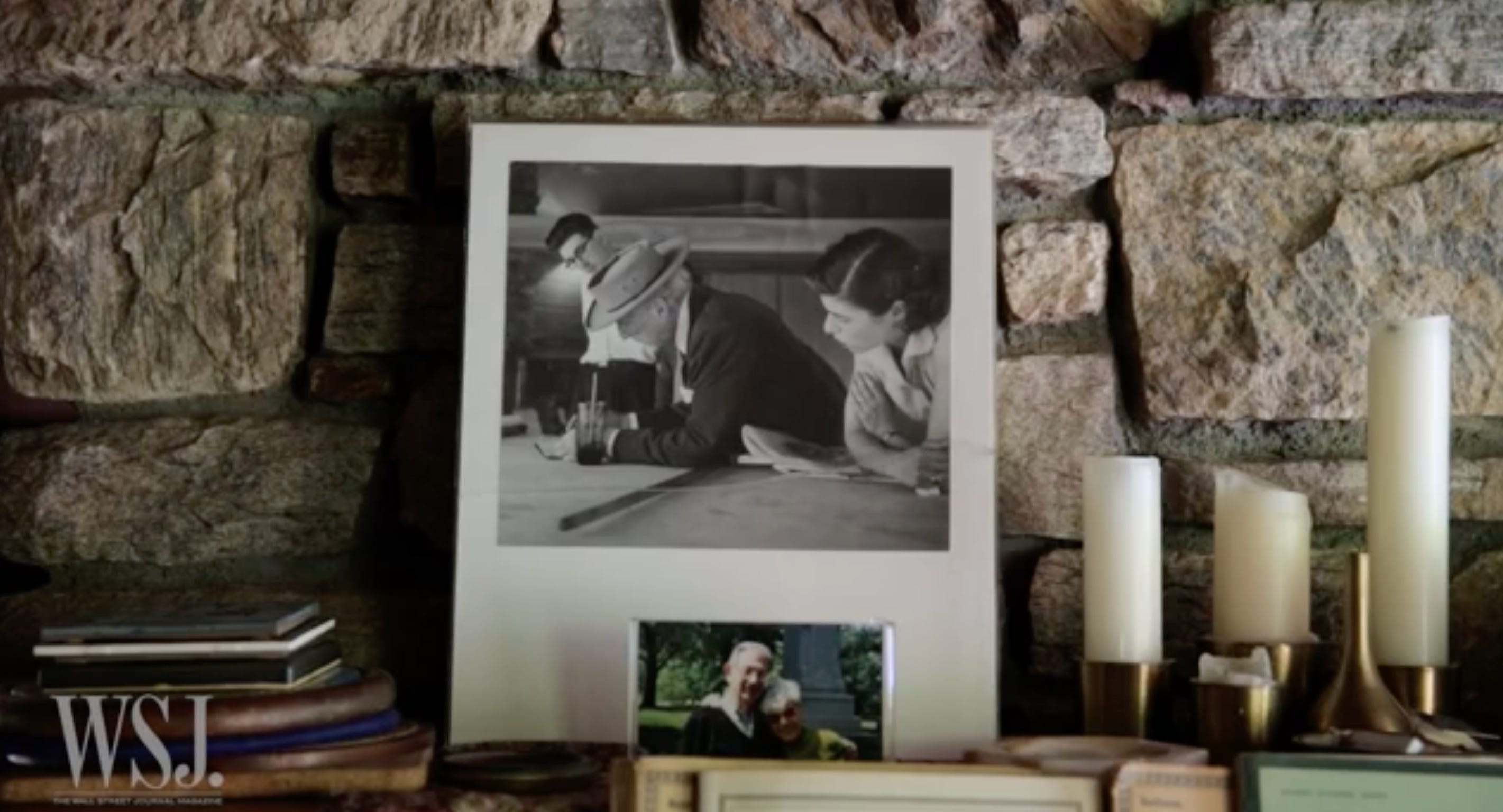
And the relationship didn’t end with the drawings. During construction, Roland found opportunities to shape details inside Wright’s system. He’s shared the story of co-designing the fascia after the original copper roof plan had to change.¹ He also realized a triangular roof overhang outside could support an acoustically significant loudspeaker system, and Wright encouraged him to consult a sound engineer to design it. The final setup included large woofer speakers, with a nearby wall angle adjusted slightly to prevent sound wave issues.⁵
This wasn’t “customization.” It was collaboration.
Living With Beauty, Every Day
The house expanded in 1956 to fit their growing family.⁵ The bigger story is what happened after decades of daily life in a place built with the long-term in mind.
Roland lived through the full arc of it: newlyweds, infants, toddlers, teenagers, empty nest.⁵ He later lived there as a widower, and the house still worked. He has a new partner now, and he says it still works.⁵
Over time, Roland noticed something that’s easy to dismiss until you hear it from someone who’s lived it.
“There had been not a single day of my life, even the bad days… that I was not aware of seeing something beautiful.”¹
He names the specifics: light, wood joints, seasonal color shifts through the windows, snow reflecting into the rooms. And he has noticed all this while exercising on the floor every morning.¹
Roland also points to neuroscience research he’d read suggesting that sustained exposure to beauty can reduce stress and support emotional health.
“Neuroscientists have observed that living with a sense of awareness of beauty brings… reduction of stress… Possibly even longevity… I like to attribute that to this sense of beauty that I’ve lived in all my life.”
Usonia As A Model Of Belonging
The house matters. The community did too.
Roland describes early Usonia as unusually bonded. The shared commitment wasn’t only about architecture. It was about daily life.
“We were like an extended family… the children… had 50 aunts and uncles.”¹
Kids could walk into any house. Adults responded to illness and need. Over the first 40 years, very few houses changed hands. People expanded their homes rather than move.¹
He also describes how the community’s design connected residents to nature: narrow winding roads, wooded environment, and a layout intended to blur hard boundaries between lots.¹
The Real Lesson
Roland boils down a core idea that sits at the center of what I’m exploring as part of my work with age/proof design.
“Buildings are just objects… what matters is how they make us feel.”¹
His life suggests something simple and hard to replicate with hacks — the power of daily attention, repeated over decades, supported by an environment that makes that attention easier.
Roland also remembers how expensive the house was, how he complained about costs, and how Wright encouraged them to keep going even when money was tight. “Stop if you must,” Wright told him, “and then continue when you can.” Roland even mentioned Wright letting them defer payment at times.⁵
That’s part of the lesson, too. The long game is rarely convenient, perfectly funded, or neatly timed.
Questions Worth Asking
What in your daily space makes you pause?
What change would make it easier to notice the good parts of your day as they happen?
That kind of attention scales. It works in a Wright house. It also works in an apartment, a condo, a rental, or a house you’ve lived in for twenty years.
It starts with what you choose to see and what you choose to shape. Don’t you agree?
Let me know what you think.
Until next time,
References
¹ Wright Society Virtual Summit (October 20–22, 2017), interview transcript: Bryan Kelly with Roland Reisley.
² NPR, Frank Lloyd Wright Usonia House (July 23, 2025), feature on Roland Reisley and the Usonia house.
³ 99% Invisible, Usonia 1 (podcast).
⁴ The Wall Street Journal, Wright’s Last Living Clients (YouTube, 2018).
⁵ Architectural Digest, Working With Frank Lloyd Wright: The Architect’s Last Living Client Shares His Experience With the Visionary (July 17, 2024).
Rethink Aging With Us
This is for you:
If you’re in your 30s, 40s, 50s, or beyond and not ready to fade out.
If you’re a builder, strategist, or decision-maker trying to understand what aging really means for your product, team, city, or community.
If you’re tired of “decline narratives” about age and are ready for something more honest, more useful, and more human.
Join other curious and forward-thinking people who are reconsidering what older age can be — and how to live it with intention.
Share age/proof design
Enjoyed this issue? Please forward this to friends or share by clicking below:
I had no idea there were FLW homes in Westchester!
The “piano window” in our addition lets me sit with framed views of sky and trees, we live on an average suburban lot among average suburban homes. This window lets me be beyond the neighborhood.