

The only weekly digest for forward-thinking people curious about the cultural and demographic shift reshaping the future of aging.
Written by a 40-something living inside the world’s largest retirement community. Here’s my round up of actionable insights this week to help us rethink what older age can be.
Millennials Are Aging Into Invisibility
Millennials are now entering midlife, yet cultural language around aging hasn’t kept up. The narratives still rely on decline, invisibility, or irony.
Why it matters: This generation grew up online and entered adulthood during recession. Their experience of midlife isn’t captured by outdated scripts. The lack of accurate language shapes how people understand this stage of life and how they prepare for it. Outdated assumptions still shape how aging is portrayed — often with humor that masks discomfort.
Real-world signal: Jessica Grose, writing for The New York Times, noted that Millennials are “aging into invisibility,” without a cultural playbook for what it means to be over 40.
“The question isn’t how to stop aging. It’s how to live as ourselves while we do it,” Grose wrote.
Yes, but: Youth-focused media still dominates, and those turning 40 are often portrayed as either irrelevant or in crisis. This erasure has consequences for identity, belonging, and even product design.
Hidden insight: The first digital-native generation is stepping into older adulthood. Their expectations, values, and tech fluency demand updated cultural and commercial narratives.
Takeaway: To reach this cohort, start by speaking to them as they are. But not as a stereotype.
Source: The New York Times
The Aging Cliff Is a Cultural Script With Real Consequences
Around 44, many women begin to describe a shift. They’re still ambitious, capable, and wired for growth — but no longer reflected in the stories culture tells about adulthood. Visibility drops. Language disappears. The shift is psychological, not physiological.
Why it matters: This midlife moment arrives just as many are at the height of their careers, caregiving responsibilities, and creative energy. Yet few cultural frameworks exist to support or even acknowledge this stage. The silence creates confusion: if everything still works, why does something feel off? The discomfort often stems from a mismatch between lived experience and outdated cultural scripts.
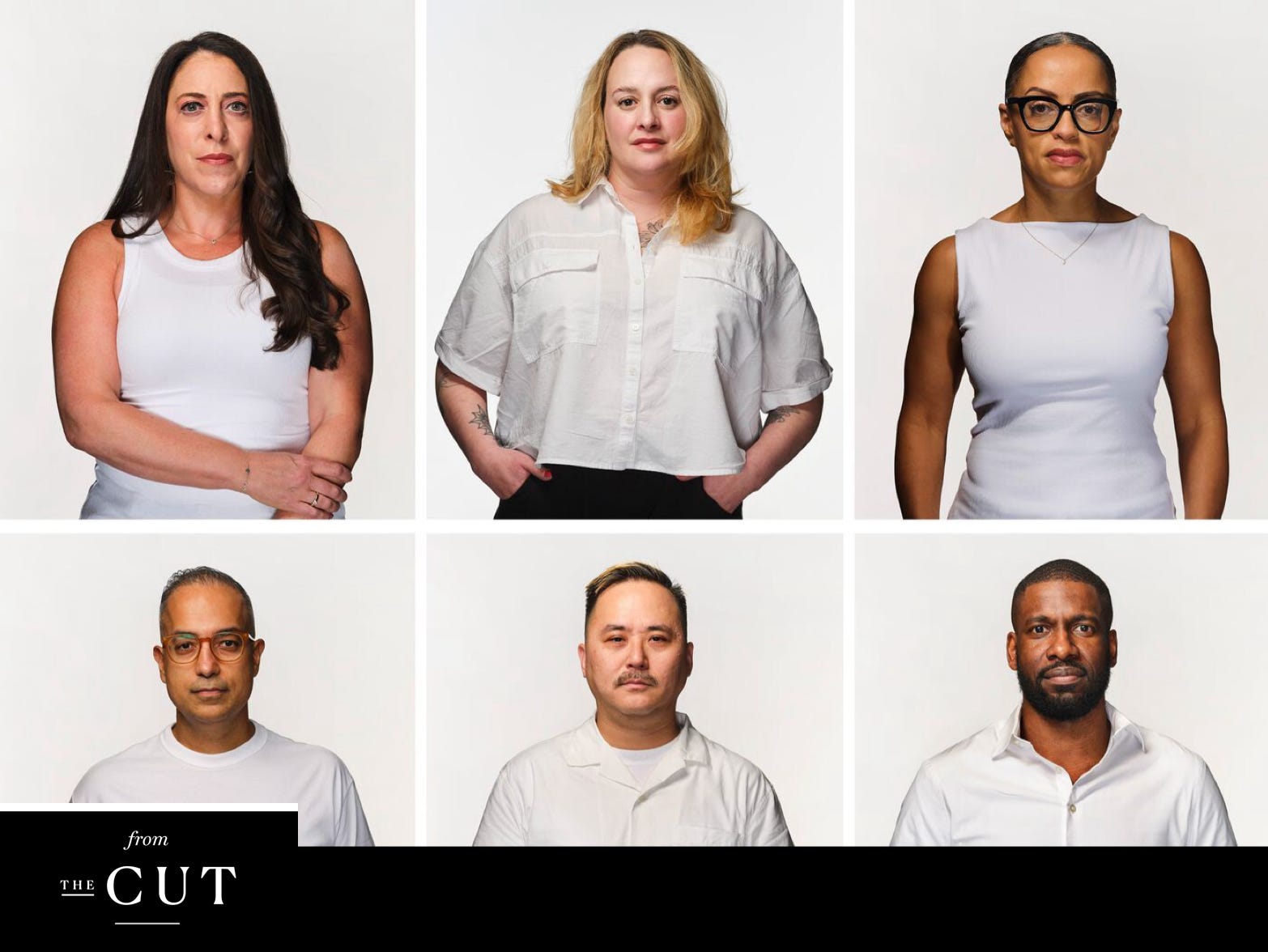
Real-world signal: In The Cut, women described reaching an “aging cliff” in their mid-40s, marked by a sudden drop in how they’re perceived by others and by themselves.
One woman explained, “I feel invisible... like I’m no longer being seen in the way I used to be — professionally, socially, even by myself.”
Yes, but: The feeling is real, but the framing isn’t fixed. This “cliff” is a story absorbed over decades, reinforced by media, marketing, and silence. Not a biological inevitability.
Hidden insight: The emotional weight many experience in midlife comes from living in a culture that treats aging as decline. What’s missing isn’t youth. It’s reflection, language, and design for this life stage.
Takeaway: Middle age isn’t vanishing — it’s just misrepresented.
Source: The Cut
Legacy, Not Leisure: What Older Adults Actually Want Now
Aging is often framed as a phase of decline, yet growing evidence shows older adults seek meaningful roles, not just rest.
Why it matters: New ventures are emerging around this shift. Instead of treating aging as a condition to be managed, they treat it as a life stage with depth. This challenges assumptions in healthcare, housing, and community-building. Many products still focus on safety or nostalgia when the demand is for relevance and impact.
Real-world signal: Joyspan, a startup co-founded by gerontologist Kerry Burnight, offers services built around connection, legacy, and emotional health.
“Older adults don’t want to be managed. They want to matter,” Burnight told TIME.
Yes, but: Resources aren’t distributed equally. Meaning, purpose, and legacy-building often require time and support that not everyone has.
Hidden insight: This is not a wellness trend. It’s a shift in how we understand value in later life — with implications for design, policy, and business.
Takeaway: Older adults aren’t looking to fade out. Many are asking what they can still build.
Source: TIME
Not Your Grandparent’s Retirement (Or Yours)
Gen X is moving into traditional retirement age — but the model no longer fits. Many want flexible, purpose-driven work over permanent exit.
Why it matters: More people in their 50s and 60s are working differently. Freelance work, consulting, and phased retirement are increasingly common. The shift reflects both values and necessity: people are living longer, and many can’t (or don’t want to) stop working. Workplace systems aren’t built for this in-between stage.
Real-world signal: The Independent reported a rise in “portfolio careers” and second acts among Gen Xers.
A labor researcher quoted in the article said, “They’re not retiring. They’re remixing.”
Yes, but: Employment law, benefits, and even office culture still treat retirement as a hard stop. There’s little built-in flexibility for those seeking something in between.
Hidden insight: People aren’t resisting retirement out of fear. They want a new structure that respects their autonomy, energy, and expertise.
Takeaway: Designing for longer lives means designing work that makes sense past 60.
Source: The Independent
When the System Fails, We Turn to Each Other
Older adults increasingly see their own financial stability in contrast with their kids’ and grandkids’ struggles. That gap is influencing behavior, values, and even spending.
Why it matters: Housing costs, student debt, and wage stagnation have reshaped family dynamics. Older generations aren’t just watching these changes. They’re responding to them. Aging is becoming a collective experience, shaped by how families absorb and redistribute pressure.
Real-world signal: In Fortune, 80-year-old retiree Mike shared concerns about his grandchildren’s futures.
“We had it good. They don’t. It keeps me up at night,” he said.
Yes, but: The empathy is real, but financial assets are still unevenly distributed. Many Boomers hold wealth through real estate, while younger generations remain locked out.
Hidden insight: Products and services designed for “retirees” will miss the mark if they don’t account for how interconnected today’s families have become.
Takeaway: To serve older adults, consider the younger generations they’re trying to support — or vice versa.
Source: Fortune
We Built Cities for the Young: Now What?
After decades of aging in place, older homeowners are beginning to move. But the shift is slow, and infrastructure is lagging behind.
Why it matters: A rise in listings by older adults is changing the housing market. Yet few homes are built for aging and even fewer for multigenerational living. Mobility in later life is shaped as much by architecture as by income.
Real-world signal: Bloomberg has reported a 9% increase in listings by homeowners over the of 65.
“It’s not a wave — more like a tide, and it’s pulling back slowly,” wrote columnist Justin Fox.
Yes, but: Many remain “house rich, cash poor,” with limited options if they sell. Retirement communities are expanding, but demand still outpaces supply.
Hidden insight: Housing transitions don’t just need inventory. They need emotional support, financial flexibility, and better design.
Takeaway: Mobility is possible if we build for it.
Source: Bloomberg
Why Family Isn’t the Fallback It Used to Be
Millions of older adults are aging without close family ties, exposing cracks in the care system that was never designed for this.
Why it matters: The traditional model assumes unpaid caregiving from spouses or children. For solo agers, that model doesn’t apply. This demographic is growing and current solutions aren’t meeting the need.
Real-world signal: WBUR documented the rise of “solo agers” in both urban and rural settings.
“Aging alone is not just about loneliness. It’s about lack of access, safety, and rights,” said psychologist Claudia Fine.
Yes, but: Many institutional settings feel impersonal or unaffordable. Community-based alternatives exist, but are often informal or inconsistent.
Hidden insight: Solo aging isn’t just a personal situation. It reveals a structural design failure that affects everything from housing to legal frameworks.
Takeaway: Build systems that support independence without requiring family.
Source: WBUR
Aging Out of the Algorithm
Retirement communities are experimenting with VR as a tool for connection and engagement. The results are promising and raise tough questions.
Why it matters: Virtual experiences are helping reduce loneliness and spark memory recall. The technology works when deployed with empathy and intention. But it can’t replace human relationships or physical presence.
Real-world signal: At a facility in Washington, residents used VR to revisit meaningful places from their past.
“For some, it’s the first time they’ve smiled in days,” program director Annette Wilson told AP News.
Yes, but: Tools like VR need support structures. Without training or thoughtful integration, they can frustrate or alienate users.
Hidden insight: Tech doesn’t need to entertain. When it deepens real-world connection, it has staying power.
Takeaway: Design for emotional resonance, not novelty.
Source: AP News
Brands Have a Messaging Problem
Older adults are spending more than any other demographic, yet brands shockingly still talk past them.
Why it matters: Boomers account for nearly 34% of U.S. consumer spending. They influence multiple industries, from travel to health to food. Despite this, most branding still assumes younger buyers are the default audience.
Real-world signal: Franchising.com reports older adults are driving growth in everything from gyms to fast-casual dining.
“They have money, time, and opinions. Ignoring them is bad business,” said one industry analyst.
Yes, but: This group isn’t one bloc or monolithic cohort. Preferences, needs, and abilities vary widely and most marketing still fails to reflect that.
Hidden insight: It’s not about special treatment. It’s about precision. Respect the customer by understanding who they are now.
Takeaway: Don’t market to an age. Market to a mindset: values, beliefs, and worldviews.
Source: Franchising.com
Until next time,
Rethink Aging With Us
This is for you and you’re in the right place:
If you’re in your 30s, 40s, 50s, or beyond and not ready to fade out.
If you’re a builder, strategist, or decision-maker trying to understand what aging really means for your product, team, city, or community.
If you’re tired of “decline narratives” about age and are ready for something more honest, more useful, and more human.
Join other curious and forward-thinking people who are reconsidering what older age can be — and how to live it with intention.
Share age/proof design
Enjoyed this issue? Please forward this to friends or share by clicking below:
This framing of midlife as an "aging cliff" captures somthing most workforce planning totally misses. The disconnect between lived experience (still capable, ambitious, energetic) and cultural scripts (decline, invisibility) isn't just psychological. I've seen companies restructure teams around this exact assumption, effectively sidelining people in their peak contribution years. The point about millennials expecting updated narratives is spot on, they grew up remixing everything else, why would aging be diferent?
As a Gen-Xer, I think we're tired.
I'll speak for myself here. I helped raise three siblings while my single mom worked three jobs. As the oldest, I had adult responsibilities by age 11. I also worked part-time jobs through middle and high school while playing sports and then had three kids before age 25. I went to college part-time while raising those kids, including grad school. My husband and I saved, clipped coupons, worked hard, sacrificed, and then divorced under the pressure of that life. In spite of that, we paid off all of our student loans and when our business went under, didn't not file for bankruptcy but took the years of payments on our backs without any help. We built a home, refinanced, weathered an upside down housing market, and lived to tell.
We were told (by our boomer parents) that we could and should have it all, and there has been a high cost to that expectation.
Frankly, at 48, I'm exhausted. I missed out on a childhood and even the fun of young adulthood. I was way too serious, way too responsible far too early in life.
Gen X is a fiercely independent, long-suffering generation that will likely change the face of retirement because while we're not dead yet, we have already given so much to all the systems with very little in return. 🖤