

The only weekly digest for forward-thinking people curious about the cultural and demographic shift reshaping the future of aging.
Written by a 40-something living inside the world’s largest retirement community. Here’s my roundup of actionable insights this week to help us rethink what older age can be.
The Hidden Costs of Changing Your Life
After another layoff, Todd Fannin’s wife, Carrie, told him: “We’re not doing this again.” They began looking for a business they could run themselves.
Why it matters: Self-employment gave them a way to keep working without another corporate hiring decision. It also put money saved for their later years at risk in a new venture.
Real-world signal: The Fannins withdrew $300,000 from retirement savings to purchase and market deck-building franchises. Their first year was a struggle. Todd described a roughly seven-year plan to build an asset they could eventually sell.
USA Today’s reporting also follows Cynthia Hennessy, who found a lower-paid legal role after being laid off at 61. Her new schedule left time for classes, mahjong, and caring for her parents.
Yes, but: The Fannins had capital available to commit. Their route offers little reassurance to someone whose savings have already been depleted by unemployment, and business ownership brings its own uncertainty.
Hidden insight: The couple’s savings are now partly tied up in a business whose sale is meant to fund their next move. They have more say over their working lives, but the value they can recover will depend on finding a buyer.
Takeaway: The Fannins’ exit plan depends partly on a future buyer, whose willingness to pay they cannot yet know.
Source: USA Today
At 63, School Pickup Brings New Friends
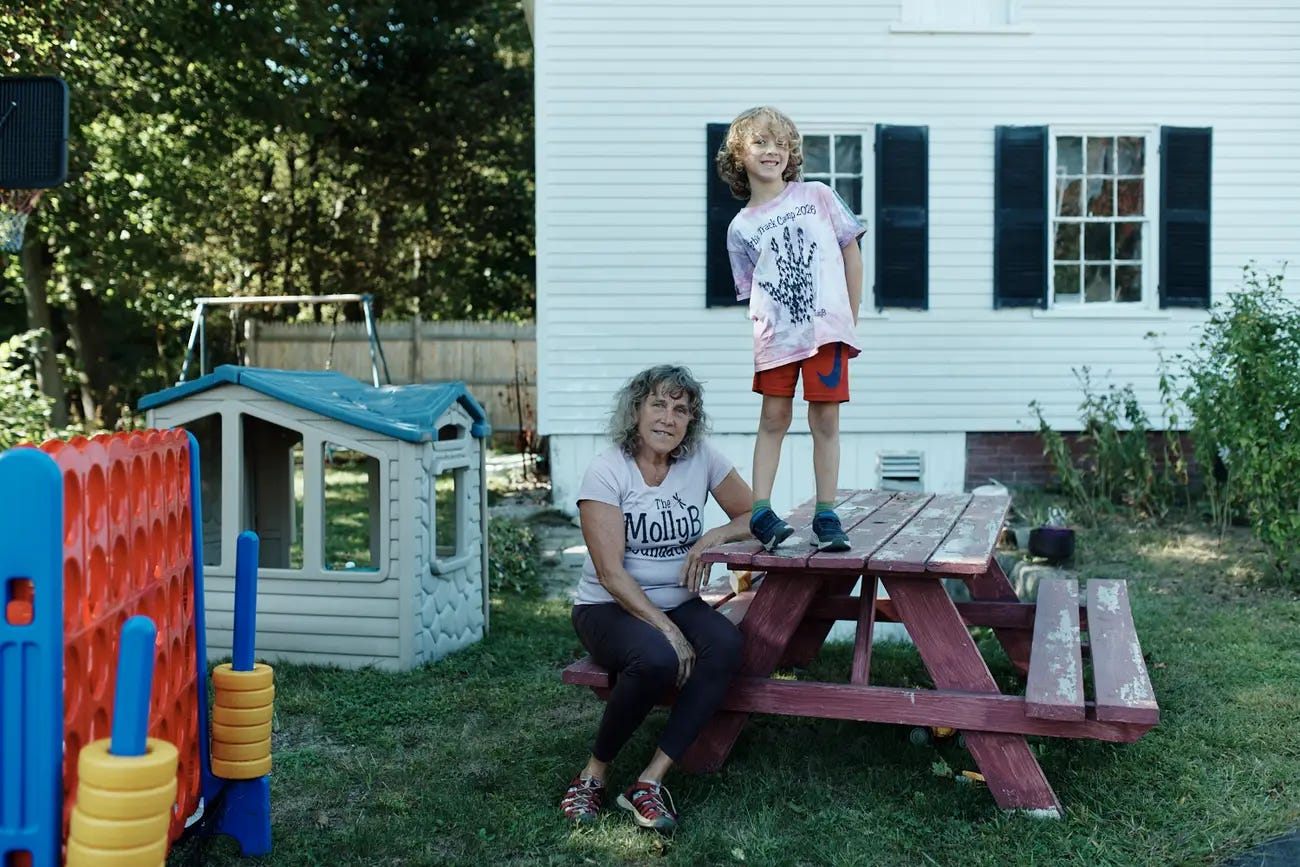
A child told Barb Higgins she looked like a grandmother. Higgins wasn’t offended. She is 63 and her son, Jack, has just started kindergarten.
Why it matters: School brings parents into regular contact with people they might otherwise never meet. For Higgins and her husband, Kenny, 71, raising Jack has opened friendships with parents in their 30s and 40s.
Real-world signal: Their calendar fills with birthday parties, field trips, and dance classes. In her as-told-to Business Insider essay, Higgins describes other parents welcoming them. Jack attends a forest school where most classes happen outdoors. Higgins says preschool and kindergarten have opened up her world.
Yes, but: This is one family’s unusual experience. Higgins says she sometimes lies awake worrying about staying healthy for Jack. Her confidence in her fitness cannot settle that uncertainty.
Hidden insight: Parenthood gives this couple a ready-made way into community life. Their invitations arrive through Jack. That leaves a useful design question. What gives adults without school-age children an equally ordinary reason to join in?
Takeaway: A neighborhood can have a busy social calendar that remains surprisingly hard to enter without a child in tow.
Source: Business Insider
After Divorce, Who Does the Unpaid Work?
A marriage can last through raising children and decades of shared routines, then end. By then, the couple may have organized almost everything around staying together.
Why it matters: The Story Exchange’s coverage of divorce after 50 raises a question that years married cannot answer. Do both people want the remaining years to look like the ones before?
Real-world signal: Using 2022 survey data, Bowling Green State University researchers examined adults 50 and older who had divorced in the previous year and remained divorced. Among those ending a first marriage, the median duration was 29 years; a quarter had been married for at least 37 years.
Those figures describe people who divorced, not the likelihood that any long marriage will end.
Yes, but: The university’s 2024 analysis cautioned against describing an uninterrupted divorce boom across everyone over 50: the overall gray-divorce rate had largely leveled off, with a slight decline among those 50–64.
Hidden insight: A long marriage can leave practical arrangements almost invisible: whose job determined where to live, who handles bills, who would help after surgery. Separation makes those arrangements explicit again. Some tasks can be divided; others may require paid help or someone else nearby. Planning for a longer life together can conceal how much each person’s plan depends on the other’s unpaid work.
Takeaway: A later-life separation changes the household’s daily workload as well as its budget.
Source: The Story Exchange; Bowling Green State University
Some Vacant Homes Need More Than Buyers
More people can be living into their 80s while more homes become vacant as older households end. Both can happen at once.
Why it matters: Housing demand depends on how people form, share, and leave households. Counting the growing older population alone misses part of what happens to the homes they occupy.
Real-world signal: Harvard’s Joint Center for Housing Studies projects that households headed by someone 80 or older will double over the next two decades. Yet the number of households headed by baby boomers fell by 3.5 million between 2015 and 2025, as deaths outweighed the generation’s increasing tendency to live alone or without a partner.
Yes, but: Homes released by older households will reduce the need for new construction only if they return to usable supply. Harvard warns that some may need substantial rehabilitation or become obsolete.
Hidden insight: This makes the condition of an older owner’s home relevant to the next household’s options. A house can remain on the map without being ready for someone to move into; the repair bill becomes part of making it available again.
Takeaway: A coming wave of available homes offers no automatic guarantee of affordable, move-in-ready housing.
Source: Harvard Joint Center for Housing Studies
She Built the Magazine She Wanted to Read
The first cover of Geezer featured cassette tapes. Inside were stories about radical kindness, senior dogs, and San Francisco’s Drag Laureate.
Why it matters: Founder Laura LeBleu wanted something she wasn’t finding on the magazine rack. Creating it herself meant deciding what deserved space, how it should look, and what kind of reading experience was worth paying for.
Real-world signal: LeBleu, 54, told Zoomer she wanted a culture magazine that addressed midlife experiences nobody had warned her generation about. She chose print, on substantial 80-pound paper, and funds the publication herself.
Yes, but: One founder’s taste cannot stand in for an entire generation. The profile does not establish whether the magazine can sustain itself financially.
Hidden insight: The choice of paper matters. LeBleu is asking readers who have lived through decades of digital change to spend time with a physical object. A product for this audience needn’t prove its relevance by chasing the newest format.
Takeaway: The audience test is whether readers want the next issue after the nostalgia of the first cover wears off.
Source: Zoomer
Until next time,
Rethink Aging With Us
This is for you and you’re in the right place:
If you’re in your 30s, 40s, 50s, or beyond and not ready to fade out.
If you’re a builder, strategist, or decision-maker trying to understand what aging really means for your product, team, city, or community.
If you’re tired of “decline narratives” about age and are ready for something more honest, more useful, and more human.
Join other curious and forward-thinking people who are reconsidering what older age can be — and how to live it with intention.
Share age/proof design
Enjoyed this issue? Please forward this to friends or share by clicking below: